Designing Your Environment for Healthy Habits
Willpower is overrated. Your environment is doing most of the work. A practical guide to designing your home and routine so healthy choices become the easy ones.

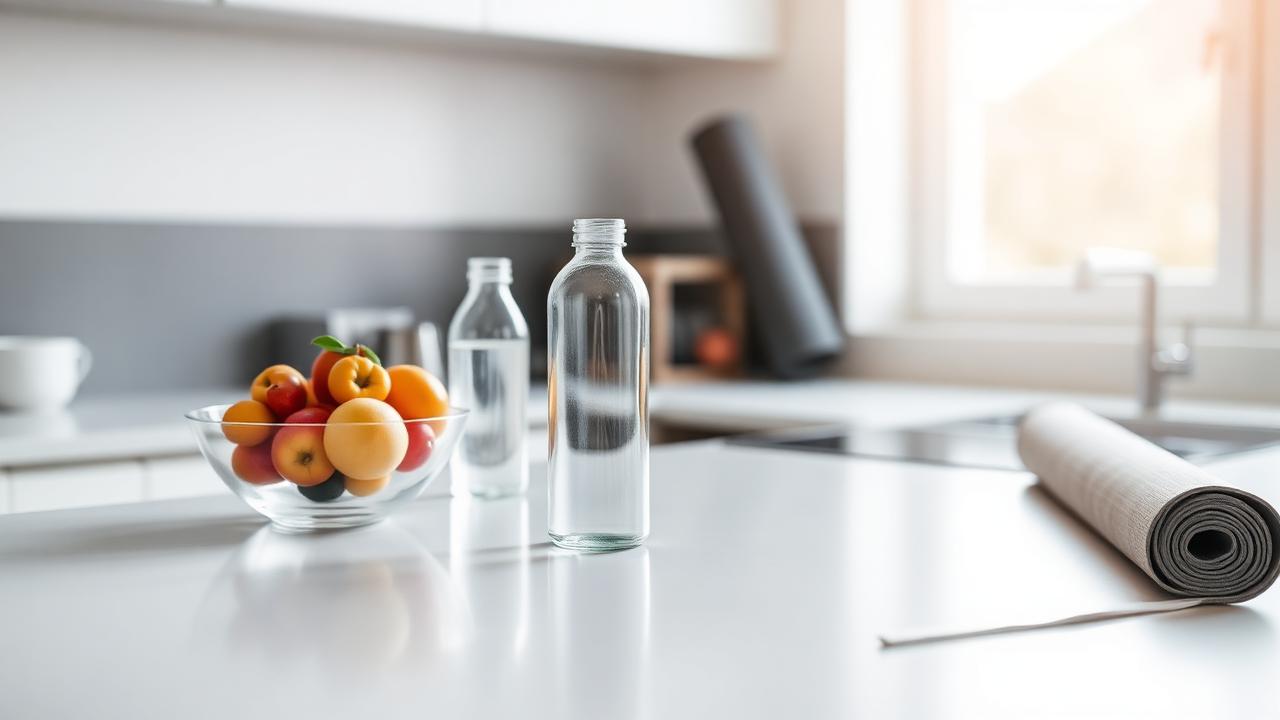
Most people try to build healthy habits by relying on motivation. They wake up determined, last a few weeks, and then quietly give up when life gets busy. The problem is rarely the person. It is the environment. Behavioural research consistently shows that environment shapes behaviour more powerfully than willpower. The good news is that you can design your environment deliberately — and once you do, healthy choices stop feeling like a fight. This guide walks through practical, low-cost ways to redesign your kitchen, home, workspace, and routines so the easy choice becomes the healthy choice.
Why Willpower Is Not the Answer
Willpower is a limited daily resource. Decisions, stress, and fatigue all deplete it. By the end of a long day, even the most disciplined person makes worse choices than they would in the morning. Research by Roy Baumeister and others, and behavioural design work by BJ Fogg and James Clear, all converge on the same conclusion: the people who consistently live healthily are not more disciplined — they have arranged their lives so that less discipline is required.
This is empowering, not deflating. It means that the work of building a healthier life happens in advance, in a calm moment when you can think clearly, not in the heated moment when willpower fails.
The Two Core Principles of Environment Design
Principle one: make the healthy choice easier. Reduce the steps, time, and friction between you and the behaviour you want. Principle two: make the unhealthy choice harder. Add steps, time, and friction between you and the behaviour you want to reduce. Almost every practical strategy in this guide is a version of these two principles applied to different parts of life.
Designing Your Kitchen
The kitchen is the single most powerful environment to redesign. Most overeating, snacking, and poor food choices happen because of what's easy to grab. Move the fruit bowl to the counter at eye level. Move biscuits and chips into a cupboard you actually have to open and reach for — or stop buying them at all, since 'not in the house' is the most reliable form of restraint.
Pre-wash and pre-cut vegetables once a week and store them at the front of the fridge in clear containers. Cooked grains, boiled eggs, and roasted chickpeas in the fridge dramatically increase the odds of throwing together a balanced meal on a tired evening. Keep a clear water bottle visible on the counter or your desk — visible water is consumed water.
The plate and bowl trick
Research summarised by Cornell University's Food and Brand Lab found that smaller plates and bowls reduce average serving sizes without people feeling deprived. Using a slightly smaller dinner plate is a small structural change that quietly affects thousands of meals over the years.
Designing Your Movement Environment
Exercise consistency is heavily influenced by how easy it is to start. Lay out your workout clothes the night before. Keep a yoga mat unrolled in your bedroom or living room. If you go to a gym, choose one on your daily commute rather than one that requires a detour. If you walk, choose a fixed loop near home so you don't have to plan a route.
For home training, a pair of adjustable dumbbells, a resistance band, and a mat covers almost every general fitness goal. Visible equipment lowers the activation energy of starting. Equipment hidden in a cupboard is equipment that doesn't get used.
Designing Your Sleep Environment
Sleep is profoundly shaped by environment. Keep the bedroom cool, dark, and quiet. Use blackout curtains or an eye mask if needed. Remove the phone — buy a cheap separate alarm clock if necessary. The bedroom should signal one thing to your brain: rest. Avoid working, eating, or doomscrolling in bed if at all possible.
The hour before bed matters as much as the bed itself. Dim the lights, lower the screen brightness, and end the day with a calming activity — reading, gentle stretching, a warm shower, light conversation. The Cleveland Clinic and Mayo Clinic both highlight wind-down routines as one of the most reliable ways to improve sleep quality without medication.
Designing Your Workspace
Your workspace shapes posture, focus, and how often you move. Set up a screen at eye level if you can. Keep a water bottle in sight. Place healthy snacks (nuts, fruit, yoghurt) in your line of sight; tuck biscuits and chocolates out of view. Schedule three or four short 'movement breaks' through the day — a two-minute walk, a few squats, a stretch — and put them in your calendar like meetings.
Limit notifications during focused work periods. Single-tasked time is not a luxury; it is the foundation of meaningful productivity and a calmer nervous system, as research by Dr. Gloria Mark and others has consistently shown.
Designing Your Social and Digital Environment
Who you spend time with, and what you consume online, are environment too. Surround yourself with people who walk, cook, sleep, and rest in ways you want to emulate. You do not have to abandon friends with different habits — but the people you see most often quietly shape what feels normal.
On phones and laptops, the most effective changes are upstream: delete or hide the apps that drain you, turn off non-essential notifications, and choose what fills your feed deliberately. Curating your inputs is one of the quietest but most powerful health practices of the modern age.
Building Habits That Actually Stick
When designing new habits, start far smaller than feels meaningful. Two minutes of stretching after brushing your teeth. A glass of water before every meal. Five minutes of walking after lunch. These tiny habits become anchors that scale up over months, which is exactly what BJ Fogg's research on Tiny Habits suggests works best.
Stack new habits onto existing ones (a technique called 'habit stacking'): after I make coffee, I take my supplements; after I sit at my desk, I drink a glass of water; after dinner, I take a 10-minute walk. The existing routine acts as the trigger, removing the need to remember.
Tracking without overcomplicating
A simple paper calendar where you mark an X for each day you complete a habit is one of the most effective trackers ever studied. The visible chain of Xs becomes a quiet motivation in itself. Apps can work, but simplicity is usually more durable.
Common Mistakes
Trying to redesign every part of your life at once and burning out within a week. Buying expensive equipment instead of starting with what you have. Setting unrealistic targets ('an hour of exercise every day') instead of starting with two minutes. Underestimating how much your environment is already shaping your behaviour. Beating yourself up for missing a day instead of calmly resetting the next morning.
Room-by-Room Audit: Setting Up Your Space for Success
The fastest way to change behaviour is not to read another book about behaviour — it is to walk through your own home with a notebook and ask, in each room, what is the easy choice here? Then change the easy choice.
Kitchen: keep a bowl of fruit on the counter; move biscuits and chocolate to a high shelf where you cannot see them; pre-cut vegetables on Sunday and store them at eye level in the fridge; keep a full water jug on the table at every meal. Behavioural studies summarised by researchers like Brian Wansink (with appropriate caveats about reproducibility) and more rigorously by groups at the University of Cambridge show that visibility and proximity often outperform willpower in food choice by a wide margin.
Bedroom: charge your phone outside it; keep a book on the bedside table; lower the lights an hour before sleep; aim for cool, dark, quiet. Living room: place a yoga mat or resistance band visibly next to the sofa; move the remote farther away from your usual seat; consider replacing one big screen with shelves of books. Workspace: stand for at least one short meeting per day; keep a refillable water bottle on the desk; place healthy snacks (nuts, fruit) within reach, and move sweets out of the office entirely.
Entryway: keep walking shoes, a jacket, and a small bag with headphones ready by the door so a daily walk takes ten seconds to start, not ten minutes. Bathroom: floss next to your toothbrush, vitamin D next to the kettle if you take one, scales tucked away if daily weighing causes anxiety. Each tweak is tiny. Stacked over months, they reshape what 'normal' looks like in your home — and normal is what you do without thinking.
Friction is your ally and your enemy
The two-question rule, popularised in behaviour-change writing, is simple. For habits you want more of, ask: how can I make this easier? For habits you want less of, ask: how can I make this harder? Two minutes of friction in front of social media, snacking, or alcohol can prevent dozens of unwanted choices a week. Two minutes of removed friction in front of walking, water, or vegetables can produce dozens of better ones.
People, Schedules, and the Wider Environment
Physical space matters, but so does the human environment around you. Long-term studies — notably the Framingham research analysed by Christakis and Fowler — suggest that habits like exercise, eating patterns, and even mood spread through social networks. You do not need to ditch your friends to be healthier, but you do benefit from spending more time with people who model the habits you want and from being honest about the influence of those who don't.
Schedule design matters too. Most people overestimate how much they can squeeze into a day and underestimate how much friction there is in starting things. Anchor your most important habits to a fixed point in your day — a morning walk before coffee, a strength session before dinner, a wind-down at the same time every night. Habit stacking, as described by James Clear, simply means tying a new habit to an existing reliable one. After I make my morning coffee, I drink a glass of water. After I sit at my desk, I write one priority for the day. Tiny, anchored, repeated.
Finally, build a quiet review into your week. Fifteen minutes on a Sunday is enough. What worked, what didn't, what is the one small environment tweak for the week ahead? This is the entire science of behaviour change in a single block: notice, adjust, repeat. The point is not to design a perfect life. The point is to design a life where doing the right thing requires less of you each week.
Key Takeaways
- Environment shapes behaviour more than willpower.
- Make healthy choices easier and unhealthy choices harder.
- Redesign one space at a time — kitchen, bedroom, workspace.
- Tiny habits anchored to existing routines compound powerfully.
- Visible cues drive consistent behaviour; hidden cues fade.
Frequently Asked Questions
How long until new habits feel automatic?
Research suggests anywhere from 2–8 weeks depending on the habit and the person — much longer than the popular '21 day' myth. Patience and consistency win.
Do I have to give up unhealthy foods entirely?
Not at all. The 80/20 principle — most meals nourishing, some genuinely enjoyable without guilt — is sustainable and well-supported.
What if I live with people who don't share my goals?
Focus on your own zones (your desk, your side of the kitchen counter), communicate kindly, and let your consistency become its own quiet influence.
Is this just about productivity?
No. The same principles apply to rest, joy, and relationships. Design for the life you want, not just the tasks you do.
Conclusion
Healthy living is not a daily battle against yourself. It is a series of small, deliberate design choices that quietly carry you in the right direction. Redesign one corner of your life this week — your kitchen counter, your bedside table, your workspace — and notice how much easier the next few weeks feel. The most disciplined-looking people are usually just the ones whose environment is doing most of the work. Always consult a qualified healthcare professional before making major changes to diet or exercise.
Sources & Further Reading
More on Healthy Lifestyle
- → Sleep Hygiene Mastery: The Ultimate Guide to Restorative Sleep
- → 10 Science-Backed Benefits of Drinking Water Daily
- → 15 Healthy Lifestyle Changes That Actually Work (Long-Term)
You may also like

10 Science-Backed Benefits of Drinking Water Daily
Hydration is the most underrated wellness habit. Here are 10 research-backed reasons to drink your water every day.
15 Healthy Lifestyle Changes That Actually Work (Long-Term)
Fifteen small lifestyle shifts that quietly compound into a healthier, longer life — without overhauling your week.

Sleep Hygiene Mastery: The Ultimate Guide to Restorative Sleep
Sleep is the most underrated health upgrade most people can make. A calm, complete guide to building sleep hygiene that actually leads to restorative rest.