Decoding Food Labels: Hidden Sugars, Additives, and Processed Foods
Food labels are designed to look healthier than they are. Here's how to read them properly, spot hidden sugars, and choose foods that actually serve you.

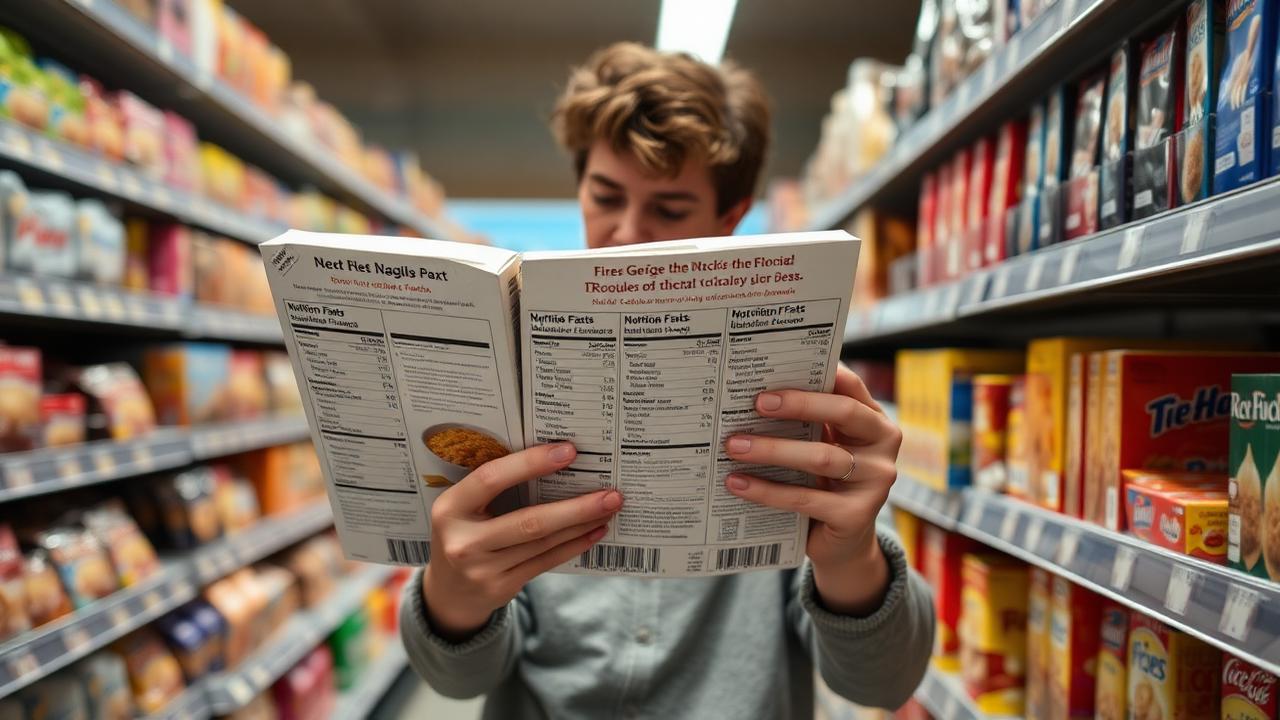
Walk down any supermarket aisle and you will see hundreds of packets shouting 'natural,' 'low fat,' 'high fibre,' 'no added sugar,' or 'made with whole grains.' Most of these claims are designed to make products look healthier than they are. The real story lives in two small places on every package — the ingredient list and the nutrition facts panel. Learning to read both with a little skill is one of the highest-return nutrition skills you can build. This guide walks through exactly how, with practical examples you can apply tonight.
Why Front-of-Pack Claims Are Often Misleading
Front-of-pack claims like 'natural,' 'healthy,' 'multigrain,' 'lite,' or 'made with real fruit' are largely marketing — they have loose or no regulatory definition in many countries. A cereal can be labelled 'multigrain' while containing mostly refined flour and added sugar. A yoghurt can claim 'no added sugar' while containing concentrated fruit juice that behaves like sugar in the body. A snack can be 'baked, not fried' while still being ultra-processed and calorie-dense.
The World Health Organization, FDA, and FSSAI (in India) have all moved toward clearer regulations, but most countries still allow significant marketing language. Treat front-of-pack claims as a starting clue, not a verdict. Flip the package over and read the back.
How to Read the Ingredient List
Ingredients are listed in descending order by weight. The first three ingredients usually make up most of the product. If those three are whole foods you recognise — oats, milk, lentils, tomatoes — the product is generally a good choice. If they are refined flour, sugar (in any form), and oil, no amount of vitamin fortification on the front of the pack changes what the product actually is.
Aim for short ingredient lists with names you recognise. A simple rule from researchers like Michael Pollan, often cited by Harvard Health Publishing, is to favour foods with fewer than five ingredients, none of which would be unfamiliar to your grandmother. This isn't a strict rule, but it filters out an enormous amount of ultra-processed food without much effort.
Hidden Sugars: The Many Names of the Same Ingredient
Sugar is added to thousands of products you would not expect — pasta sauce, salad dressing, bread, breakfast cereals, flavoured yoghurt, granola bars, peanut butter, fruit juice, condiments, and even soups. Manufacturers often split sugar into several different ingredients so each one appears further down the list, even though the total adds up to a lot.
Common names for added sugar include sucrose, dextrose, glucose, fructose, maltose, high-fructose corn syrup, corn syrup solids, cane juice, evaporated cane juice, agave nectar, brown rice syrup, malt syrup, fruit juice concentrate, and invert sugar. If you see two or three of these in one ingredient list, the product is almost certainly higher in sugar than it appears.
The American Heart Association recommends limiting added sugars to no more than 25 g (women) and 36 g (men) per day. A single flavoured yoghurt or sweetened beverage can use up most of that allowance in one serving.
Reading the Nutrition Facts Panel
Start with serving size. Many packages list nutrition per serving that is much smaller than what people actually eat — a bottle of juice may have 'two servings' even though you'll drink the whole bottle. Multiply everything by the realistic serving you'll consume.
Then check four things in order: total sugar (and 'added sugar' if listed), fibre, protein, and sodium. For a single serving of a snack or processed food, useful rough benchmarks include: under 5 g of added sugar, at least 3 g of fibre, a reasonable protein content for what the food is supposed to be (cereal should have more than 5 g per serving), and sodium under roughly 400 mg per serving. These are guidelines, not absolutes.
Calories matter less than the quality picture. A 250-calorie snack of nuts and dried fruit is very different from a 250-calorie pack of cookies, even though the energy number is identical.
Understanding Additives: What's Real and What's Hype
Food additives include preservatives, emulsifiers, thickeners, colours, flavours, and stabilisers. Most additives in regulated markets have been evaluated for safety by agencies like the WHO, FDA, EFSA, and FSSAI. That does not mean every additive is desirable — but the panic around all 'E numbers' is generally not supported by evidence.
What does seem to matter, based on research summarised by Harvard Health and the NIH, is the overall degree of food processing. Ultra-processed foods (industrially produced foods with multiple additives, refined ingredients, and little resemblance to the original raw food) have been associated in large observational studies with higher risk of obesity, type 2 diabetes, and cardiovascular disease. The issue isn't a single additive — it is the whole food matrix.
The NOVA classification: a useful mental model
The NOVA system groups foods into four categories: unprocessed/minimally processed (fruit, vegetables, eggs, milk, rice), processed culinary ingredients (oil, butter, salt, sugar), processed foods (bread, cheese, canned vegetables), and ultra-processed foods (sweetened cereals, instant noodles, sugary drinks, packaged biscuits, most fast food). Aiming for at least 70–80% of your daily calories from the first three groups is a practical, sustainable target.
Sodium, Trans Fats, and Other Things Worth Watching
Sodium adds up faster than most people realise. Bread, sauces, pickles, packaged snacks, restaurant food, and processed meats can push daily intake well past WHO's recommendation of under 5 g of salt (around 2 g of sodium) per day. High sodium is linked to higher blood pressure and cardiovascular risk for many people.
Trans fats, found in some commercial baked goods, fried snacks, and certain margarines, are recognised by the WHO as a serious cardiovascular risk and are being phased out globally. Look for 'partially hydrogenated oil' on ingredient lists and avoid those products. Many countries have already banned industrial trans fats — but they still appear in some snacks, especially in unregulated markets.
Practical Tips for Smarter Shopping
Shop the perimeter of the store first — vegetables, fruit, eggs, dairy, fish, meat, and fresh staples usually live there. Treat the inner aisles as a place for specific purchases (oats, lentils, spices, oil) rather than an open invitation. Make a list before you go and don't shop hungry; both habits dramatically reduce impulse buys of ultra-processed snacks.
When comparing two similar products, read the ingredient lists side by side. The product with the shorter list, fewer added sugars, and more recognisable ingredients is usually the better choice. Over time, this becomes a fast, almost automatic skill — and it quietly improves the quality of every meal you cook for years.
Common label-reading mistakes
Trusting 'sugar-free' without checking for sugar alcohols and artificial sweeteners. Believing 'low fat' means low calorie. Ignoring serving size. Assuming 'natural' means healthy. Confusing 'fortified with vitamins' (added later) with 'naturally rich in vitamins' (inherent to the food).
Comparing Two Products on the Same Shelf
The best way to build label-reading skill is to compare two products that look almost identical. Take two breakfast cereals from the same shelf. Both might claim 'wholegrain', 'high in fibre', and 'no artificial colours' on the front. The back tells a very different story. Cereal A: 4 g of sugar per 40 g serving, 6 g of fibre, ingredient list of three items. Cereal B: 14 g of sugar per 40 g serving, 2 g of fibre, ingredient list with twelve items including three different sweeteners. They sit on the same shelf, often at the same price, marketed almost identically — and one of them is essentially a dessert.
This is the routine to build. Pick up the product you would normally buy. Pick up two similar products beside it. Look at three numbers — sugar, fibre, sodium — and one list (ingredients). Within thirty seconds you will know which product is closest to whole food. Do this for a few weeks and you will stop reading marketing claims at all; the back of the pack becomes your default.
A useful informal rule from researchers like Dr Michael Pollan: if the ingredient list is longer than your shopping list, put it back. If it includes ingredients your grandmother would not recognise, put it back. None of this is anti-processed-food — many useful staples are processed. It is anti-misleading.
The traffic-light system at a glance
Many countries use a colour-coded label per 100 g: green (low), amber (medium), red (high) for fat, saturated fat, sugar, and salt. The UK Food Standards Agency and several European agencies use it. A product with mostly green and amber lights is generally a sensible everyday choice. Mostly red lights means save it for a treat, not a daily staple — regardless of how the front of the pack is dressed up.
Common Marketing Claims and What They Actually Mean
Front-of-pack claims are designed to sell, not to inform. 'Natural' is largely unregulated and means very little. 'No added sugar' can mean the product is still loaded with fruit-juice concentrate. 'Light' or 'lite' must legally mean 30% less of something than the standard version — but that something might be fat, calories, or even just colour. 'Multigrain' simply means more than one grain — none of which need to be wholegrain. 'Made with real fruit' can mean a single percent of fruit in a sugar-heavy bar.
Two claims that are more reliable, because they're tightly regulated in most markets, are 'wholegrain' as the first ingredient and certified organic logos. Even these are not nutrition guarantees — an organic biscuit is still a biscuit — but they tell you something concrete about the product. Health Star Ratings and Nutri-Score (used in parts of Europe) are also useful at-a-glance tools that summarise overall nutritional quality on a single scale.
Be especially careful with foods marketed to children and to people trying to lose weight. These two categories receive the most aggressive marketing and contain some of the most surprising sugar and additive loads in the supermarket. Read the back of the pack with the same attention you would give an unknown brand. Your time at the shelf is the best investment you can make in the next three months of meals.
Key Takeaways
- Front-of-pack claims are marketing — read the back of the package.
- The first three ingredients tell most of the story.
- Sugar hides under dozens of names; look for several at once.
- Watch sodium and avoid industrial trans fats.
- Aim for mostly minimally processed foods most of the time.
Frequently Asked Questions
Are all processed foods bad?
No. Bread, cheese, canned tomatoes, and frozen vegetables are technically processed and entirely fine. The concern is ultra-processed foods, which are a different category.
Is 'organic' automatically healthier?
Organic refers to how a food is grown, not its nutritional quality. An organic biscuit is still a biscuit.
How much added sugar is too much?
Major health bodies suggest under 25 g per day for women and under 36 g for men from added sugars — many people consume much more without realising.
Are artificial sweeteners safe?
Regulators consider approved sweeteners safe at typical intakes, but some research suggests they may affect appetite and the gut microbiome. Moderation is sensible.
Conclusion
Reading food labels well is a quiet superpower. It does not require obsession or perfection — just a few seconds of attention on the back of the pack, repeated thousands of times across a lifetime of grocery trips. Over years, that small habit shapes the quality of every meal you serve yourself and your family. Always consult a qualified healthcare professional for personalised dietary advice, especially if you have a medical condition.
Sources & Further Reading
More on Healthy Eating
- → Nutrient Timing: How to Optimize Meals for Energy and Recovery
- → Healthy Eating Habits for Beginners: A Simple Starter Guide
- → 10 Foods That Naturally Boost Energy (No Caffeine Crash)
You may also like
Healthy Eating Habits for Beginners: A Simple Starter Guide
If you've ever felt overwhelmed by nutrition advice, this calm, beginner-friendly guide breaks healthy eating down into small habits you can start today.
10 Foods That Naturally Boost Energy (No Caffeine Crash)
Ten everyday foods that deliver real, sustained energy — not a caffeine spike followed by an afternoon crash.
20 Best Protein-Rich Vegetarian Foods (With Grams Per Serving)
A practical, ranked list of vegetarian protein sources with grams per serving — so you can actually hit your protein target.