Strength Training for Beginners: The Complete 8-Week Plan
A simple eight-week strength plan designed for total beginners — three sessions a week, big results, low injury risk.

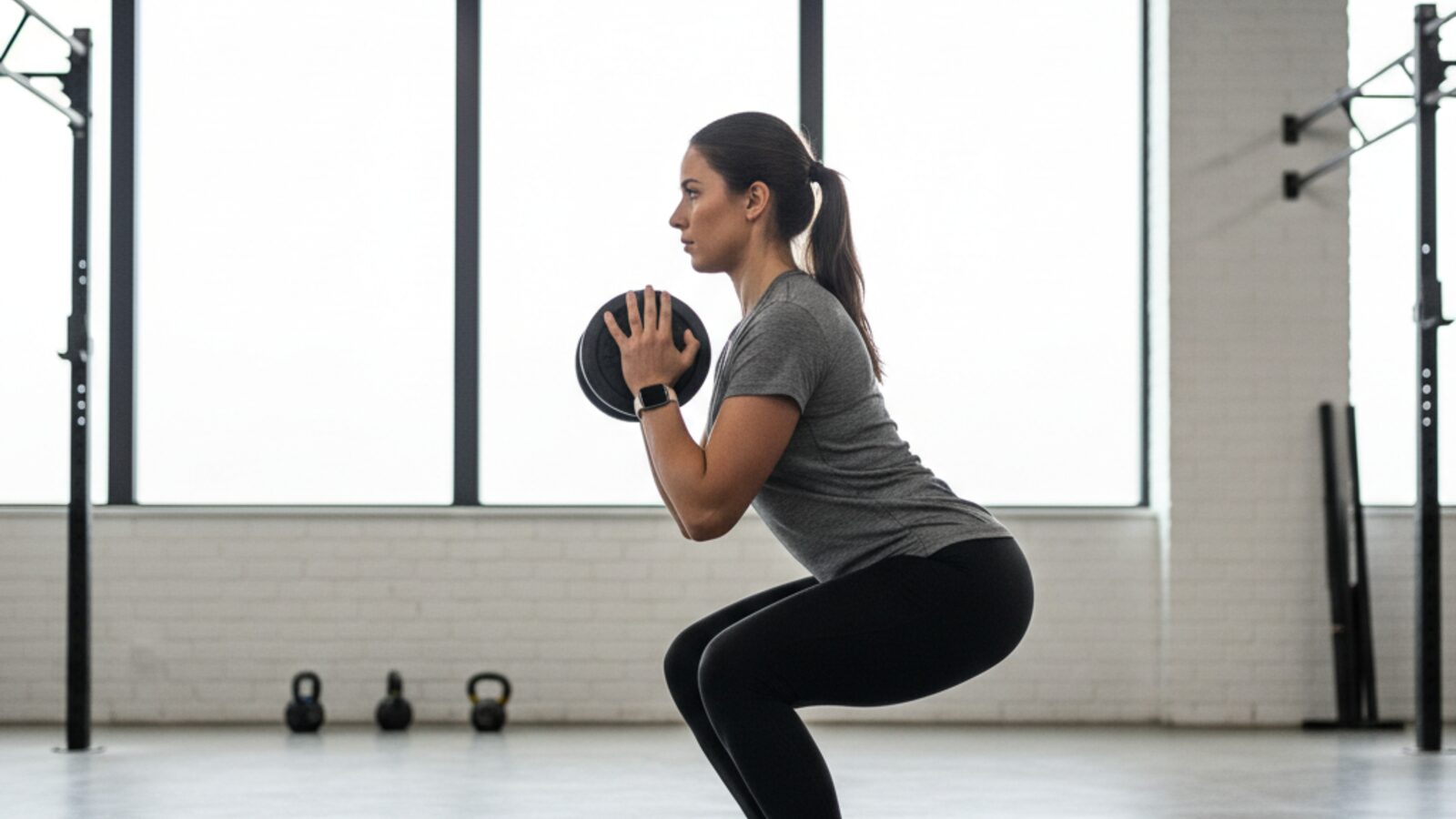
Strength training is the single best thing you can do for your body after age 30. It builds muscle, protects bones, raises metabolism, and improves how you move for the rest of your life. Here's your first eight weeks.
Equipment Needed
A pair of adjustable dumbbells (or access to a basic gym). Nothing else.
The Plan — 3 Sessions Per Week (A, B, A — alternating)
Workout A
Goblet squat — 3 × 8 Dumbbell bench press (or floor press) — 3 × 8 Bent-over row — 3 × 10 Forearm plank — 3 × 30 sec
Workout B
Romanian deadlift — 3 × 8 Overhead press — 3 × 8 Lat pulldown or assisted pull-up — 3 × 10 Dead bug — 3 × 8 per side
Progression Rules
Add 1–2.5kg per movement once you can complete all reps with perfect form. If you fail before the last rep, repeat the same weight next session. Week 1–2: get form right. Week 3–5: add weight slowly. Week 6–8: add a 4th set on your two strongest lifts.
Form Non-Negotiables
Neutral spine on every hinge (deadlift, row). Full range of motion — half reps build half results. Controlled lowering (3 seconds down). Breathe out on the hard part.
Recovery
Eat 1.6g protein per kg bodyweight. Sleep 7+ hours. Walk on rest days. Don't add cardio until week 4 — let strength gains lead.
The Biological Mechanisms of Muscle Growth and Adaptation
Strength training is fundamentally governed by the principle of progressive overload, which dictates that muscle tissue must be challenged by gradually increasing demands to stimulate growth and neural adaptation. When you lift a weight, you create microscopic tears in the muscle fibers. The body repairs these tears during rest intervals, making the fibers thicker and stronger. This process, known as hypertrophy, is not just about aesthetic muscle gain; it is a critical metabolic adaptation that improves insulin sensitivity and glucose disposal. According to the National Institutes of Health (NIH), consistent resistance training can counteract the natural loss of muscle mass that begins in the third decade of life, a condition known as sarcopenia.
Beyond the muscular system, strength training facilitates profound changes in bone density. The World Health Organization (WHO) emphasizes weight-bearing exercise as a primary preventative measure against osteoporosis. When muscles pull against bone during a squat or a press, it stimulates osteoblasts—cells responsible for bone formation—to lay down new mineral content. Furthermore, the central nervous system undergoes a 'learning' phase during the first few weeks of any program. This is why beginners often see rapid strength gains (often called 'newbie gains') before any visible muscle growth occurs; the brain is simply becoming more efficient at recruiting existing muscle fibers to move as a cohesive unit.
The Science of Compound vs. Isolation Movements
For a beginner, the most effective way to build a foundation is through compound lifts. These are multi-joint movements that work several muscle groups simultaneously, providing the greatest hormonal and metabolic 'bang for your buck.' Unlike isolation exercises, such as a bicep curl, compound lifts like the squat, deadlift, and overhead press mimic real-world movements. They require the body to stabilize itself, engaging the core and the smaller stabilizer muscles that are often neglected in machine-based training. Harvard Health emphasizes that compound movements improve 'functional fitness,' ensuring that the strength you build in the gym translates to ease of movement in daily life, such as carrying groceries or climbing stairs.
The primary compound lifts include the squat (lower body push), the deadlift (lower body pull), the bench press (horizontal push), the row (horizontal pull), and the overhead press (vertical push). Mastering these five movements provides a comprehensive full-body workout. For beginners, the focus should remain on these staples because they allow for the fastest progression in weight. Because so many muscles are involved, you can safely lift more total weight than you could on an isolation machine, which sends a louder signal to your endocrine system to produce growth-promoting hormones like testosterone and growth hormone.
Focusing on the Big Rocks: Squats and Deadlifts
The squat is often called the 'king of exercises' because it engages the quadriceps, hamstrings, glutes, and the entire spinal erector complex. For beginners, starting with a goblet squat (holding a weight at your chest) is often safer and helps establish the necessary hip mobility before moving to a barbell back squat. The deadlift, conversely, focuses on the 'posterior chain'—the muscles you cannot see in the mirror. It is the purest test of total body strength and is essential for developing a resilient lower back and powerful glutes. Proper hinging at the hips is the key technique to master here to avoid spinal strain.
Navigating the Weight Room: A Beginner’s Psychological Guide
The first visit to a weight room can be intimidating, a phenomenon often referred to as 'gym anxiety.' It is important to remember that every regular at the gym started exactly where you are. Preparation is the best antidote to this anxiety. Before stepping onto the floor, have your 8-week plan written down or logged in an app. Knowing exactly which rack you need to head toward and which weights you need to grab eliminates the 'analysis paralysis' that often leads beginners to retreat to the treadmill. The Mayo Clinic suggests that having a structured plan increases workout adherence significantly compared to those who 'wing it' upon arrival.
When you first enter the weight area, take a moment to observe the flow. Familiarize yourself with the squat racks, the dumbbell area, and the cable machines. If you are unsure how to adjust a bench or a machine, do not hesitate to ask a staff member; using equipment incorrectly is a leading cause of preventable injury. A good strategy for your first session is to arrive during off-peak hours (typically mid-morning or late evening) to give yourself space to learn the equipment without the pressure of a crowd. Your primary goal in the first week is not to lift heavy, but to establish a routine and feel comfortable in the environment.
Practical Tips for Your First Session
1. Wear comfortable, flat-soled shoes to provide a stable base for lifting. 2. Bring a water bottle and a small towel. 3. Log every set and rep; data is your best friend in tracking progress. 4. Use a mirror to check your form, but do not rely on it exclusively; develop a 'feel' for the movement. 5. If a piece of equipment is occupied, politely ask 'how many sets do you have left?' or find a comparable alternative listed in your plan.
Common Pitfalls and How to Avoid Them
The most common mistake beginners make is prioritizing the amount of weight on the bar over the quality of the movement. This 'ego lifting' is the quickest path to injury. In the first four weeks of your 8-week plan, the weight should feel relatively light. You are training your nervous system to map the movement patterns. If your knees cave in during a squat or your back rounds during a deadlift, the weight is too heavy, regardless of what the numbers say. Proper form ensures that the stress of the lift is placed on the muscles rather than the joints and connective tissues.
Another critical error is lack of consistency. Strength training is a cumulative process. Missing one session may not seem like much, but it interrupts the momentum of neural adaptation. Similarly, many beginners change their routine too frequently, often called 'muscle confusion.' In reality, muscles do not need to be 'confused'; they need to be challenged consistently with the same movements over time. Stick to the 8-week plan without adding extra exercises or swapping lifts because you saw a new trend on social media. Stability in your program allows you to accurately measure your strength gains.
Breathing and Warm-up Errors
Breath-holding, or the Valsalva maneuver, is often misused by beginners. While advanced lifters use it to stabilize the core, beginners should focus on a rhythmic breathing pattern: exhale on the exertion (the 'hard' part) and inhale on the return. Forgetting to warm up is another major mistake. A 5-10 minute dynamic warmup—including arm circles, leg swings, and bodyweight squats—is essential to increase blood flow and synovial fluid in the joints, reducing the risk of acute tears.
Nutritional Foundations for Strength Gains
Nutrition is the fuel that powers your workouts and the raw material that builds your muscles. Without adequate caloric and protein intake, your body will struggle to recover from the stimulus of strength training. The ICMR and other health organizations suggest that those engaged in regular resistance training need more protein than sedentary individuals. A general guideline is to aim for roughly 1.2 to 1.6 grams of protein per kilogram of body weight. This protein provides the amino acids necessary for muscle protein synthesis, the process of repairing and expanding muscle tissue.
Carbohydrates are equally important as they are the primary fuel source for high-intensity efforts like lifting weights. Consuming a carbohydrate-rich meal or snack 1-2 hours before your workout can improve your performance and stamina. Post-workout, a combination of protein and carbohydrates helps replenish glycogen stores and kickstarts the recovery process. Hydration, often overlooked, is vital for muscle contraction and joint lubrication. Even minor dehydration can lead to a significant drop in strength and focus during your session. Treat your kitchen as an extension of the gym; you cannot out-train a poor diet.
Who Should Exercise Caution? Safety and Medical Considerations village
While strength training is beneficial for almost everyone, certain individuals should consult a physician before beginning a program. This includes those with pre-existing cardiovascular conditions, as lifting heavy weights causes a temporary but significant spike in blood pressure. Individuals with severe joint issues, such as advanced osteoarthritis or recent spinal surgeries, may need a modified program designed by a physical therapist. The goal is to move safely within your current physical capacity while slowly expanding those limits.
You should seek professional medical advice if you experience sharp, stabbing pain during a lift. Distinguishing between 'good' pain (the burning sensation of muscle fatigue or delayed onset muscle soreness) and 'bad' pain (joint clicks, nerve impingement, or sharp pulls) is a skill developed over time. If a specific movement consistently causes discomfort in a joint rather than a muscle, stop the exercise and seek a form check or medical evaluation. CDC guidelines suggest that while physical activity is generally safe, listening to your body's warning signs is the best way to ensure long-term health and avoid chronic overuse injuries.
Long-Term Sustainability: Beyond the First 8 Weeks
As you approach the end of your 8-week plan, you will likely find that you are significantly stronger than when you started. However, the 'honeymoon phase' of rapid gains will eventually slow down. To maintain your progress and keep the habit sustainable for years, you must embrace the concept of 'periodization'—varying the intensity and volume of your workouts. This might mean taking a 'deload week' every 8 to 12 weeks, where you reduce the weights by 30-50% to allow your central nervous system and joints to fully recover from the accumulated stress. Myo-clinc researchers suggest this prevents burnout and overtraining syndrome.
Sustainability also comes from finding a community or a deeper 'why' for your training. Whether it is wanting to remain independent in old age, improving your performance in a hobby sport, or simply enjoying the mental clarity that comes after a hard session, your motivation needs to evolve beyond just the initial 8-week goal. Strength training is a lifelong journey. The habits you build in these first two months—tracking your lifts, prioritizing form, and fueling your body—are the bedrock upon which a decade of health can be built. Welcome to the world of lifting; the goal is not to be the strongest person in the gym, but to be stronger than you were yesterday. village
Key Takeaways
- Three short sessions a week is enough to transform your strength in 8 weeks.
- Compound lifts (squat, hinge, press, row) cover 90% of what you need.
- Form first, progression second. Patience beats ego.
Frequently Asked Questions
How heavy should I lift as a beginner?
Heavy enough that the last 1–2 reps feel hard with perfect form. If form breaks, reduce weight.
Will I get bulky?
No. Visible muscle takes years of dedicated training and surplus calories. You'll get strong, lean, and toned.
Conclusion
Eight weeks is enough to transform how strong you feel. Pick up the dumbbells today and let your future self thank you.
Sources & Further Reading
More on Fitness & Workouts
- → Building Functional Strength: Why Compound Movements Matter
- → HIIT vs Steady-State Cardio: Which One Works Best for Endurance?
- → The Best Morning Workout Routine at Home (20 Minutes, No Equipment)
You may also like

The Best Morning Workout Routine at Home (20 Minutes, No Equipment)
A complete 20-minute morning routine you can do beside your bed — mobility, strength, and a short cardio finisher to set up the rest of your day.

Home Workout Without Equipment: A 30-Minute Full-Body Plan
A balanced 30-minute home workout using nothing but your bodyweight, your breath, and the floor under your feet.

The 8 Best Exercises for Belly Fat (And the Truth About Spot Reduction)
The eight movements that build a strong core and burn calories — plus the honest truth about whether you can target belly fat.