The 8 Best Exercises for Belly Fat (And the Truth About Spot Reduction)
The eight movements that build a strong core and burn calories — plus the honest truth about whether you can target belly fat.

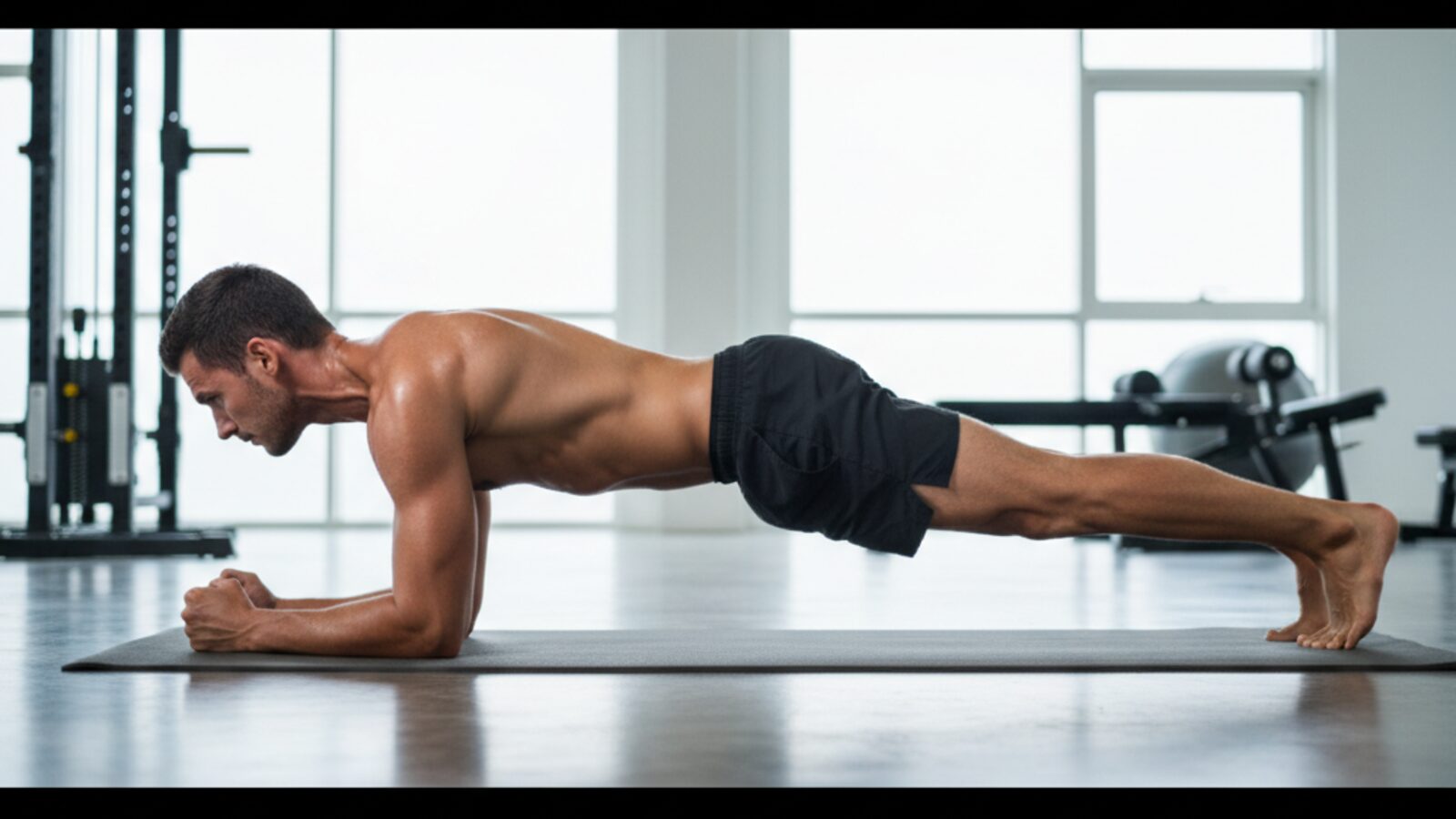
You cannot crunch your way to a flat stomach. Belly fat shrinks when your overall body fat drops. But the right combination of strength, core control, and high-intensity work pulls in your waist faster than crunches ever will.
1. Plank Variations
Forearm plank, side plank, plank to push-up. Three movements that build true core stability.
2. Dead Bugs
Lying on your back, opposite arm and leg lower slowly. The single best core exercise for protecting your lower back.
3. Mountain Climbers
Cardio plus core in one movement. Three rounds of 30 seconds burns serious calories.
4. Russian Twists
Add a 2–5kg weight once form is dialled. Trains obliques effectively.
5. Kettlebell Swings
A full posterior chain explosive lift that elevates heart rate fast. 4 sets of 15 swings is a complete metabolic workout.
6. Burpees
Universally hated, universally effective. Even 5 sets of 8 burpees burns 80–120 calories.
7. Compound Lifts
Squats, deadlifts, and overhead presses build whole-body muscle that raises your resting metabolic rate.
8. HIIT Intervals
20 seconds work, 40 seconds rest, for 10 rounds. Pick any cardio modality. Burns calories during and after via EPOC.
The Honest Truth About Spot Reduction
Studies in the Journal of Strength & Conditioning Research consistently show you cannot reduce fat in one area through local exercise. Belly fat responds to total deficit, protein, sleep, and stress management. Strong abs only become visible when the layer above them shrinks.
The Biological Science of Abdominal Fat Loss
The biological mechanism behind visceral fat—the deep abdominal fat that surrounds internal organs—differs significantly from subcutaneous fat, which sits just under the skin. Visceral fat is metabolically active and acts more like an organ than a storage site, secreting cytokines and hormones that can increase inflammation in the body. While the primary goal of abdominal training is often aesthetic, the functional necessity of reducing this specific type of adipose tissue is linked to lowering the risk of metabolic syndrome, type 2 diabetes, and cardiovascular diseases. According to the Mayo Clinic, even individuals who are not technically overweight can have high levels of visceral fat, a condition often referred to as 'normal-weight obesity.' Having a protruding waistline is typically the first clinical sign that a person's system is struggling with fat distribution.
When we discuss the best exercises for belly fat, we are looking at activities that improve insulin sensitivity and increase our Resting Metabolic Rate (RMR). It is not the calorie burn during the workout that matters most, but the metabolic after-effect, known as Excess Post-exercise Oxygen Consumption (EPOC). This occurs when the body works at a level of intensity that requires hours of recovery to return to homeostasis, during which time it continues to burn calories at an elevated rate. Furthermore, skeletal muscle is one of the most glucose-hungry tissues in the body. By building more muscle mass through resistance training, individuals can improve their body's ability to manage blood sugar, which inherently stops the body from storing excess energy as abdominal fat. This systemic approach is the only science-backed method for long-term waistline reduction.
Understanding Deep Core Stability and the Transverse Abdominis
One of the most overlooked aspects of core training is the role of deep stability. While 'six-pack' muscles (rectus abdominis) get all the attention, it is the transverse abdominis (TVA) that acts as the body's natural corset. The TVA is the deepest layer of abdominal muscle, and its primary job is to compress the ribs and viscera, providing thoracic and pelvic stability. When this muscle is weak, the abdomen can appear to protrude or 'pooch' outward, regardless of how much body fat a person has. Exercises that focus on bracing and 'hollowing' are essential for pulling the waistline inward and creating a tighter midsection frame.
This deep core activation is also vital for spinal health. Research from the NIH suggests that a strong core serves as the foundation for all human movement, transferring force from the lower body to the upper body. Without a stable center, compound movements like squats and deadlifts become dangerous. Therefore, the best exercises for belly fat are those that force the core to stabilize against external forces. This is why isometric holds and heavy carries are often more effective for waistline aesthetics than traditional sit-ups. They teach the muscles how to stay under tension and maintain a firm, flat structure under load, which translates to better posture and a more streamlined silhouette.
Posture and the Illusion of Belly Fat
Targeted breathing techniques, such as the stomach vacuum, involve a voluntary contraction of the TVA. To perform this, one must exhale all air from the lungs and pull the navel in toward the spine as tightly as possible. This does not burn fat directly, but it tones the internal wall of the abdomen, making the stomach appear flatter in a relaxed state. Holding this for 20 to 30 seconds can significantly improve core control.
Anterior pelvic tilt is a common postural issue where the pelvis tips forward, causing the belly to spill out and the lower back to arch excessively. This is often caused by tight hip flexors and weak glutes. By strengthening the core and re-aligning the pelvis through glute bridges and tucking exercises, the 'belly' often disappears without a single pound of weight loss, simply because the internal organs are no longer being pushed forward by a misaligned skeletal structure.
Advanced HIIT Strategies for Accelerated Fat Oxidation
High-Intensity Interval Training (HIIT) is frequently cited as the gold standard for fat loss, but it is often misunderstood or performed incorrectly. To truly target abdominal fat, HIIT must achieve a heart rate of 85% to 95% of its maximum. At this level, the body undergoes a hormonal shift, increasing the release of catecholamines (like adrenaline) which help mobilize fat from adipose tissue. For beginners, jumping into a high-impact HIIT routine can lead to injury and burnout. A gradual progression—starting with intervals on a low-impact machine like an elliptical or rower—allows the cardiovascular system to adapt before the joints are tasked with high-speed sprints or burpees.
The beauty of HIIT for belly fat lies in its efficiency. A 20-minute session that involves alternating between 30 seconds of maximal effort and 60 seconds of active recovery can be more effective for fat oxidation than an hour of steady-state jogging. This is largely due to the hormonal response mentioned earlier and the preservation of lean muscle mass. While long-distance running can sometimes lead to muscle wasting (catabolism), short bursts of power training encourage the body to keep its muscle and burn fat for fuel instead. For those with busy schedules, HIIT provides a high 'return on investment,' making it a sustainable strategy for maintaining a lean midsection over time.
Designing an Effective Interval Circuit
The Work-to-Rest Ratio is the most critical variable in HIIT. Beginners should start with a 1:3 ratio (e.g., 20 seconds of work, 60 seconds of rest). As fitness improves, moving toward a 1:1 or even a 2:1 ratio increases the metabolic stress and the fat-burning potential of the workout. This progression ensures that the heart rate remains elevated enough to trigger the desired physiological changes without overtaxing the central nervous system.
Selecting the right movements for HIIT is equally important. Exercises that use the whole body, such as thrusters, battle ropes, or hill sprints, are superior to isolated movements. The more muscle groups involved, the higher the caloric demand and the greater the systemic fat-burn. This holistic approach ensures that while you aren't 'spot reducing' the belly, the body is forced to pull energy from fat stores across the entire torso during the recovery phase.
The Role of Non-Exercise Activity Thermogenesis (NEAT)
While high-intensity work is flashy, low-intensity steady-state (LISS) cardio, such as walking, is the unsung hero of belly fat management. Walking 10,000 steps a day, or roughly 5 miles, provides a consistent, low-stress way to burn calories without spiking cortisol—the stress hormone. High levels of cortisol are scientifically linked to increased abdominal fat storage, particularly in the visceral region. If a person is already under high stress from work or lack of sleep, adding only high-intensity workouts can backfire by further elevating cortisol, which signals the body to hold onto its middle-section fat as a survival mechanism.
Walking is also highly sustainable and accessible for all fitness levels. It serves as an 'active recovery' tool that helps flush out metabolic waste from harder training sessions while contributing to the total daily energy expenditure (TDEE). According to Harvard Health, regular brisk walking can reduce the risk of heart disease and improve lipid profiles. For individuals looking to lose belly fat, the goal should be to pair 2-3 sessions of high-intensity work per week with a consistent daily walking habit. This 'lifestyle movement' approach ensures that the body remains in a calorie deficit without the extreme hunger cues often triggered by excessive high-impact cardio.
Common Pitfalls and How to Avoid Injury
The most common mistake people make when trying to lose belly fat is focusing exclusively on 'ab' exercises. Crunches and sit-ups primarily work the top layer of muscle but burn very few calories. Another frequent error is ignoring the importance of nutrition and expecting exercise to compensate for a poor diet. You cannot out-train a caloric surplus. If the goal is fat loss, the best exercises for belly fat must be supported by a diet that emphasizes whole foods, fiber, and adequate protein, which helps maintain muscle while losing fat.
Furthermore, many gym-goers lack 'mind-muscle connection' during their core workouts. They use momentum rather than muscle contraction, swinging their legs or pulling on their necks during abdominal movements. This not only renders the exercise ineffective for toning but increases the risk of lower back strain and cervical spine issues. Slowing down the tempo—specifically the eccentric (lowering) phase of an exercise—can double the tension on the muscle fibers. Instead of doing 50 fast, sloppy reps, doing 12 slow, controlled reps with a focus on 'breathing into the tension' will yield far better results for waistline definition.
The Dangers of Overtraining and Under-Recovering
The 'more is better' fallacy leads many to overtrain their core. Like any other muscle group, the abdominals need time to recover and grow. Training them every single day can lead to fatigue and poor form. Aim for 2 to 3 dedicated core sessions a week, or integrate core movements into your full-body workouts. Over-training can lead to a 'thick' waist if you are heavily loading side-bends or obliques without concurrently losing body fat, as you are essentially building muscle under a layer of adipose tissue.
Disregarding sleep is another major pitfall. A study published in the 'Annals of Internal Medicine' found that when dieters cut back on sleep, the amount of fat lost was reduced by 55%, even if their calorie intake remained the same. Sleep deprivation also increases ghrelin (the hunger hormone), making it harder to stick to the nutritional plan required for belly fat loss. Recovery is where the fat is actually burned and the muscles are repaired.
Who Should Avoid Intense Core and HIIT Workouts?
Certain populations should approach belly fat exercises with caution. Those with a history of lower back pain, herniated discs, or sciatica should avoid movements that involve spinal flexion (like crunches) or high-impact jumping. Instead, they should focus on 'anti-extension' and 'anti-rotation' exercises like the Bird-Dog or the Dead Bug, which stabilize the spine while working the core. Similarly, individuals with Pelvic Floor Dysfunction or Diastasis Recti (separation of the abdominal muscles, common after pregnancy) should consult a physical therapist before performing heavy compound lifts or intense abdominal work, as these can exacerbate their conditions if done with improper pressure management.
Individuals with a Body Mass Index (BMI) in the 'obese' category should also be careful with high-impact exercises like burpees or sprinting. The excess load on the knees, hips, and ankles can lead to joint degradation. For these individuals, low-impact fat-burning exercises like water aerobics, incline walking, or stationary cycling are safer and more effective ways to begin the fat-loss journey. Once a baseline of strength and weight loss is achieved, more intense exercises can be safely introduced. It is always recommended to consult with a healthcare professional before beginning a new, vigorous physical activity program, especially if there are underlying conditions like hypertension or diabetes.
Long-Term Sustainability and Managing Expectations
The secret to a flat stomach is not a 30-day challenge; it is the ability to maintain a healthy lifestyle indefinitely. Long-term sustainability requires finding movements that you enjoy and that don't feel like a punishment. If you hate running, don't run. Find a sport like tennis, swimming, or rock climbing that engages your core and burns fat. Diversity in training not only prevents boredom but also prevents the body from adapting too well to a single stimulus, which can lead to weight loss plateaus. Rotating between strength phases, endurance phases, and hypertrophy (muscle building) phases keeps the metabolism guessing and the progress moving forward.
Finally, psychological resilience is just as important as physical effort. Losing belly fat takes time, often months of consistency, because the midsection is typically the last place the body releases fat from due to the high density of alpha-receptors in that area. Tracking progress through non-scale victories—such as how your clothes fit, your energy levels, and your strength gains—is more motivating than checking the scale every morning. When you view the best exercises for belly fat not as a quick fix but as a tool for lifelong health, the results will not only come but will stay for years to come. Consistency, patience, and a balanced approach are the ultimate drivers of success.
Key Takeaways
- Spot reduction is a myth. Total fat loss reveals the abs you build.
- Combine strength + HIIT + core stability for the fastest waist results.
- Sleep and stress quietly drive belly fat more than people realise.
Frequently Asked Questions
How long to lose belly fat?
Visible changes typically take 6–12 weeks of consistent training and a moderate calorie deficit.
Are crunches useless?
Not useless — just incomplete. They build muscle but won't reveal it.
Conclusion
Train the whole body, eat in a small deficit, sleep seven hours, and let your waistline change quietly over weeks.
Sources & Further Reading
More on Fitness & Workouts
- → Building Functional Strength: Why Compound Movements Matter
- → HIIT vs Steady-State Cardio: Which One Works Best for Endurance?
- → The Best Morning Workout Routine at Home (20 Minutes, No Equipment)
You may also like

The Best Morning Workout Routine at Home (20 Minutes, No Equipment)
A complete 20-minute morning routine you can do beside your bed — mobility, strength, and a short cardio finisher to set up the rest of your day.

Home Workout Without Equipment: A 30-Minute Full-Body Plan
A balanced 30-minute home workout using nothing but your bodyweight, your breath, and the floor under your feet.

10 Yoga Benefits for Beginners (Backed by Science)
Ten research-backed benefits of starting a beginner yoga practice — many show up within the first month.