Best Indian Diet Plan for Fat Loss (7-Day Sample Menu)
A dietitian-designed, vegetarian-friendly Indian diet plan that supports steady fat loss without giving up your favourite foods.

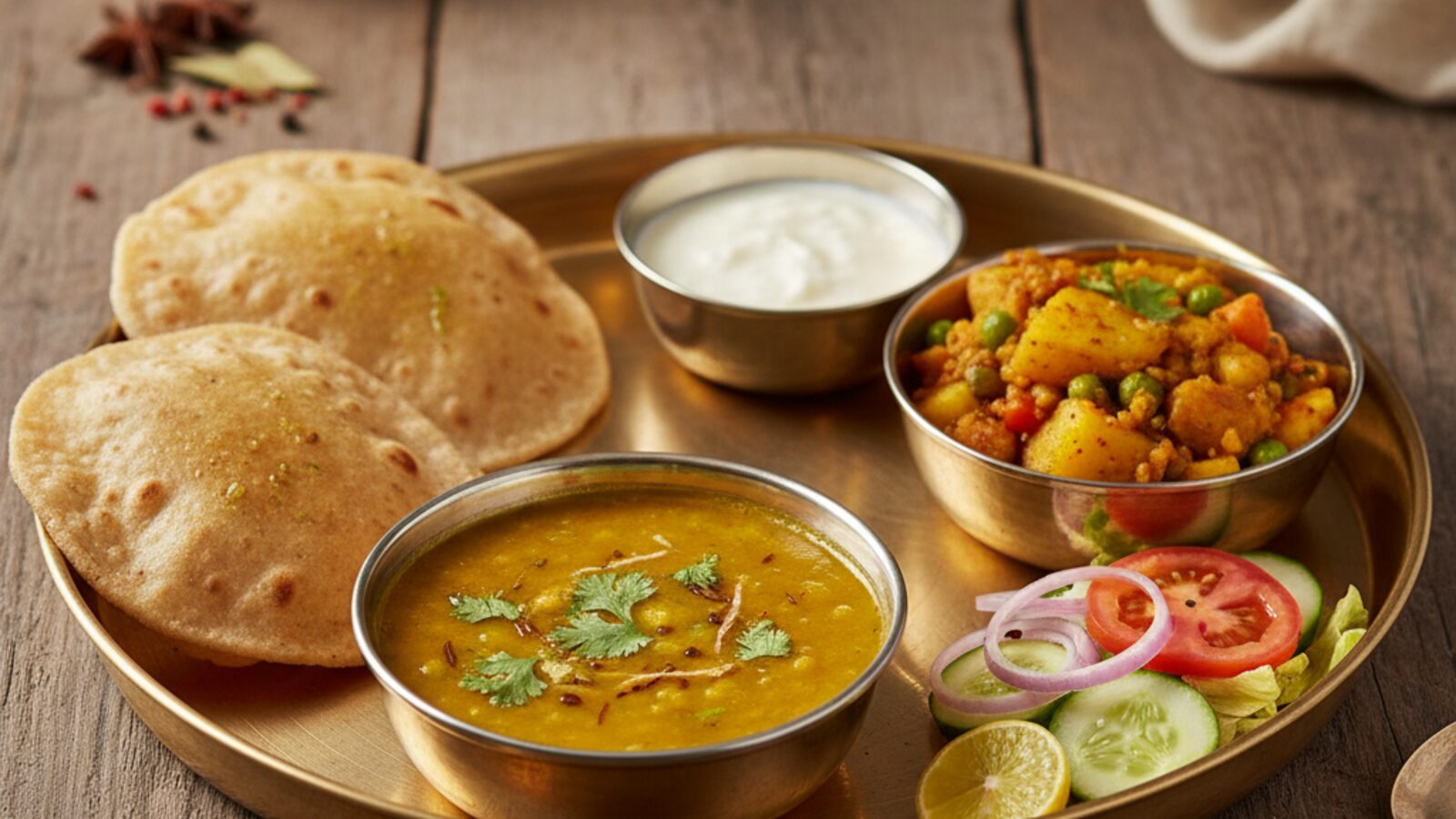
An Indian diet built around dals, vegetables, curd, and sensible portions of grains is one of the most sustainable fat-loss diets in the world. The trick is protein at every meal and respecting how easy it is to over-pour the oil.
Daily Targets (Approximately 1,500–1,700 kcal)
Protein: 90–110g Carbs: 160–190g (mostly whole grains, fruit, vegetables) Fat: 50–60g Water: 2.5–3 litres
7-Day Sample Menu
Day 1
Breakfast: Vegetable poha with peanuts + 1 glass milk Lunch: 2 multigrain rotis + paneer bhurji + cucumber salad Snack: Apple + 10 almonds Dinner: Moong dal + 1 cup brown rice + sautéed bhindi
Day 2
Breakfast: Masala oats with vegetables + 2 boiled eggs (or 100g tofu) Lunch: Rajma + 1 cup rice + salad Snack: Buttermilk + roasted chana Dinner: 2 rotis + palak paneer + curd
Day 3
Breakfast: Besan chilla with mint chutney Lunch: Vegetable khichdi + curd + papad Snack: Banana + handful walnuts Dinner: Grilled tofu (or chicken tikka) + jeera rice + cucumber raita
Day 4
Breakfast: Idli (3) + sambar + coconut chutney (small portion) Lunch: 2 rotis + chana masala + salad Snack: Sprouts chaat Dinner: Vegetable dal + 1 cup rice + sautéed greens
Day 5
Breakfast: Greek yogurt + chia + berries Lunch: Mixed vegetable thali (2 rotis + dal + sabzi + curd) Snack: Roasted makhana + green tea Dinner: Soya chunks curry + 1 cup rice + salad
Day 6
Breakfast: Vegetable upma + 1 glass milk Lunch: Paneer tikka + 2 rotis + onion salad Snack: Apple + peanut butter Dinner: Toor dal + brown rice + roasted vegetables
Day 7 (Flex Day)
Breakfast: Stuffed paratha (light ghee) + curd Lunch: A balanced restaurant or home meal of your choice Snack: Fruit Dinner: Light vegetable soup + grilled paneer/chicken
Practical Tips That Make This Work
Measure oil with a spoon, not by pouring. Two teaspoons per cooked dish is plenty.
Add a katori of dal or curd to every meal for protein.
Stand up and walk for 5 minutes after each meal.
Limit fried snacks to once a week — schedule them, don't grab them.
The Macronutrient Science of Indian Staples
Traditional Indian cuisine is inherently rich in variety and nutritional density, but modern adaptations have often skewed toward heavy carbohydrate consumption. To achieve fat loss, one must understand the ‘The Golden Ratio’ of an Indian plate. The National Institute of Nutrition (NIN) in India suggests that for weight management, a plate should be half-filled with non-starchy vegetables, a quarter with lean protein such as lentils or paneer, and the final quarter with complex carbohydrates. This structure ensures that you are receiving high volume for low caloric density, allowing for satiety without the energy surplus that leads to fat storage.
The science of fat loss in an Indian context revolves heavily around the Insulin Index of foods. Many staple Indian breakfasts, like white rice idlis or flattened rice (poha), can lead to rapid blood glucose spikes if not tempered with fiber. By integrating fermented foods and indigenous grains like Ragi (Finger Millet) and Jowar (Sorghum), you can stabilize insulin levels. Lower insulin levels allow the body to access stored adipose tissue more effectively for energy. This physiological shift is crucial for long-term metabolic health and prevents the 'yo-yo' effect often seen in restrictive calorie counting.
The Protein Paradox in Vegetarian Plates
One common misconception in Indian vegetarian diets is that dal is a primary protein source. While dal does contain protein, it is predominantly a carbohydrate. To offset this, individuals should focus on 'protein-combining'—pairing legumes with a small portion of whole grains to create a complete amino acid profile. Incorporating high-protein additions like sattu (roasted gram flour), soybeans, and Greek-style curd can bridge the gap that often stalls fat loss progress in vegetarians.
The Metabolic Power of Indian Spices and Herbs
Spices are the backbone of Indian cooking, but their role extends far beyond flavoring. Compounds found in common spices act as natural thermogenics, which subtly increase the body's metabolic rate. For instance, Piperine in black pepper and Capsaicin in green chilies can stimulate the sympathetic nervous system to burn more calories. Turmeric, containing Curcumin, is widely studied by the NIH for its anti-inflammatory properties; since obesity is often characterized by low-grade systemic inflammation, reducing this inflammation through spice-rich diets can make fat loss more efficient.
Cumin (Jeera) and Fenugreek (Methi) also play pivotal roles in glucose metabolism. Research indicates that fenugreek seeds can improve insulin sensitivity, making it easier for the body to process carbohydrates rather than storing them as fat. Incorporating these into the 'Tadka' or tempering of dishes is not just a culinary tradition but a metabolic necessity. However, the benefits are often negated if these spices are fried in excessive amounts of ghee or refined oils. Using a measured teaspoon of cold-pressed oils ensures you gain the medicinal benefits of the spices without the caloric 'oil trap.'
Common Mistakes and How to Correct Them
The most frequent obstacle in an Indian fat loss journey is 'Hidden Fats.' Traditional cooking often uses an unmeasured 'pour' of oil from the bottle, which can add 300 to 500 hidden calories to an otherwise healthy vegetable sabzi. To fix this, adopt the 'One-Spoon Rule': use exactly one level tablespoon of oil per person for the entire day's cooking. Switching to non-stick cookware or stainless steel with a heavy bottom can significantly reduce the need for fats to prevent sticking.
Another common pitfall is the 'Rice and Roti' trap. Many Indians consume multiple rotis or large mounds of rice with a very small portion of vegetables. To reverse this, try the 'Veggie-First' approach. Consuming a bowl of salad or a clear vegetable soup 15 minutes before the main meal can activate stretch receptors in the stomach, releasing satiety hormones like CCK (cholecystokinin). This ensures that by the time you reach for the carbohydrates, you are naturally inclined to eat smaller portions, thereby reducing your total caloric intake effortlessly.
The Peril of Mindless Snacking
While 'paltu' or homemade snacks are better than processed ones, items like bhujia, makhana fried in ghee, or even excess nuts can be calorie-dense. A handful of almonds is healthy, but three handfuls provide more calories than a full meal. For fat loss, snacking should be functional—think sprout salads, boiled eggs, or buttermilk (chaas)—rather than crunchy or salty tidbits that trigger overeating.
Sustainability and Long-Term Lifestyle Integration
An Indian diet plan for fat loss is only as good as its long-term feasibility. Many people fail because they try to switch entirely to salads and oats, which are not culturally familiar. Sustainable fat loss occurs when you 'Indianize' your health goals. Continue eating your favorite curries but change the base. For example, instead of a cream-based paneer butter masala, opt for a tomato and onion-based paneer bhurji. Instead of deep-fried parathas, choose a dry-toasted paratha stuffed with nutrient-dense fillings like radish or spinach.
Social eating is another challenge in the Indian context, where hospitality is often expressed through high-calorie sweets and snacks. Sustainability involves learning the art of 'The Selective Plate.' At a wedding or party, choose the tandoori starters and dal tadka over the malai koftas and naan. By making these small compromises, you can enjoy social life without derailing your 7-day or 30-day progress. Fat loss is a marathon, and the best diet is the one you can see yourself following three years from now, not just three weeks from now.
Troubleshooting Plateaus and the Role of Hydration
If you are stuck at a weight-loss plateau despite following a 1,500-calorie Indian diet, it may be time to look at your fiber intake. The WHO recommends at least 25-30 grams of fiber daily, yet many modern lifestyles fall short. Fiber acts as a 'physical barrier' in the gut, slowing down the absorption of sugars and fats. Heavy reliance on 'Maida' (refined flour) in biscuits and breads removes this essential nutrient. Shifting back to whole-wheat atta with added bran, or brown rice, can restart a stalled metabolism.
Hydration is the second pillar of troubleshooting. In the Indian climate, it is easy to confuse thirst with hunger. Drinking water consistently throughout the day is vital, but what you drink matters. Traditional beverages like unsweetened 'Nimbu Pani' (lemonade), 'Chaas' (buttermilk), and 'Kokum Sharbat' are excellent for electrolytes. However, avoid the common habit of 'Chai' with 2-3 teaspoons of sugar multiple times a day. These liquid calories add up quickly and provoke insulin spikes that halt fat oxidation. Moving to stevia or simply reducing sugar gradually can result in significant fat loss over a month.
The Sleep-Stress-Fat Connection
Sleep and stress are often-ignored factors in fat loss. High cortisol from lack of sleep or work stress signals the body to store fat in the abdominal region. No amount of 'Jeera water' can overcome a chronic lack of sleep. Ensure 7-8 hours of rest to allow your hormones, especially ghrelin and leptin, to regulate your appetite for the coming day.
Who Should Avoid Restrictive Fat Loss Plans?
While a balanced Indian diet is generally safe for everyone, certain groups should approach fat loss with caution. Individuals with Type 2 Diabetes should be wary of fruit-heavy or high-carb 'fasting' diets. While fruits are healthy, an excess of mangoes or grapes can spike blood sugar. For those with Chronic Kidney Disease (CKD), the high protein intake (dals and paneer) usually recommended for fat loss must be strictly monitored by a healthcare professional to avoid overtaxing the kidneys.
Pregnant and lactating women should rarely follow a restrictive fat-loss diet. Their nutritional requirements for folate, iron, and calcium are significantly higher. Instead of 'fat loss,' the focus should be on 'nutrient density.' Similarly, elderly individuals must ensure they do not lose muscle mass while trying to lose fat. Sarcopenia (muscle loss) is a real risk; therefore, any Indian diet plan for the elderly must be paired with adequate protein and light resistance training to ensure the weight lost is actually fat and not vital muscle tissue.
Maintenance: Life After the 7-Day Plan
Achieving your fat loss goal is only the first half of the journey; maintaining it requires a shift from a 'diet' mindset to a 'lifestyle' mindset. Once you reach your target weight, you can gradually increase your caloric intake—primarily through healthy fats and complex carbs—to reach 'maintenance' calories. However, you should not return to old eating habits. The 'Balanced Thali' model should remain your blueprint for life. Use the '80/20 Rule': eat nutrient-dense Indian whole foods 80% of the time, and allow for indulgences 20% of the time.
Monitoring and self-awareness are key. Continue to weigh yourself or measure your waist circumference once a week. In the Indian context, 'Centrally Obesity' (belly fat) is a significant risk factor for cardiovascular disease and metabolic syndrome, even if your BMI is in the normal range. Regular physical activity, such as brisk walking, yoga, or strength training, should be non-negotiable. Physical activity helps in 'Metabolic Flexibility,' allowing your body to switch between burning carbs and fats efficiently, which is the ultimate goal of any successful weight management program.
Key Takeaways
- Indian vegetarian food can absolutely support fat loss with the right portion strategy.
- Aim for 90–110g of protein daily; dal, paneer, curd, eggs, tofu, soya are your best friends.
- Whole grains over refined; measure your oil; walk after meals.
Frequently Asked Questions
Can I eat rice and still lose weight?
Yes. Calories matter more than the carb. A controlled cup of rice with vegetables and dal is a perfectly good fat-loss meal.
Is ghee allowed?
A teaspoon a day is fine for most people and helps satiety. Track it as fat, don't pretend it's free.
Conclusion
Eat your culture, just measure your oil and respect your protein. Indian food is built for fat loss when portions are handled honestly.
Sources & Further Reading
More on Weight Loss
- → The Science of Sustainable Fat Loss: Why Diet Alone Isn't Enough
- → Intermittent Fasting and Your Body: Evidence-Based Benefits and Risks
- → The Beginner's Guide to Weight Loss (Without Crash Diets)
You may also like
The Beginner's Guide to Weight Loss (Without Crash Diets)
Everything a beginner needs to lose weight safely — calories, protein, training, and the daily habits that produce results that last.

Walking vs Running for Weight Loss: Which Actually Works Better?
Calories burned, injury risk, fat oxidation — a fair comparison of walking and running for real-world fat loss.

How Sleep Affects Weight Loss (Why Bad Sleep Stalls Fat Loss)
Sleep is the most underrated weight loss tool. Here's exactly how poor sleep stalls fat loss — and how to fix it tonight.